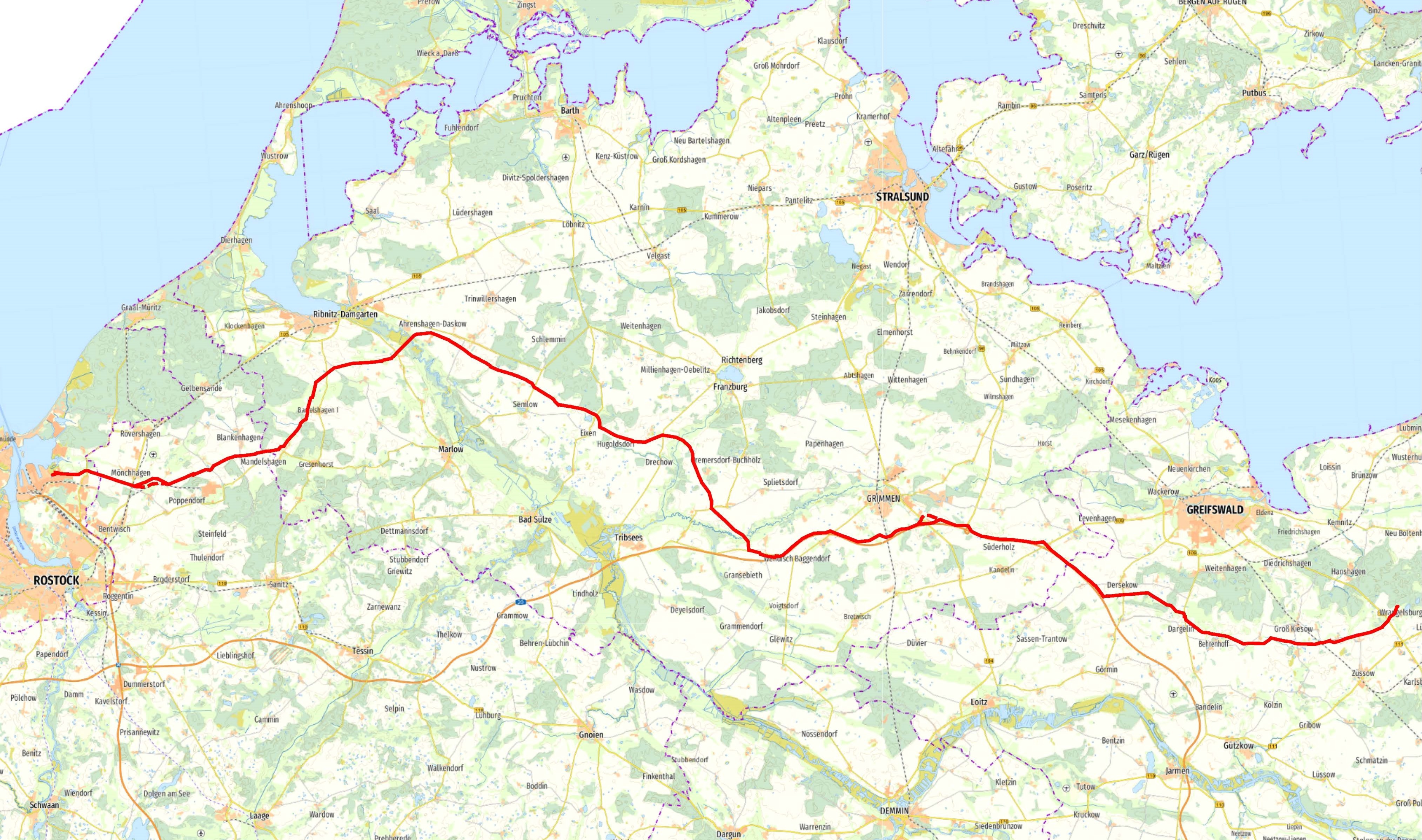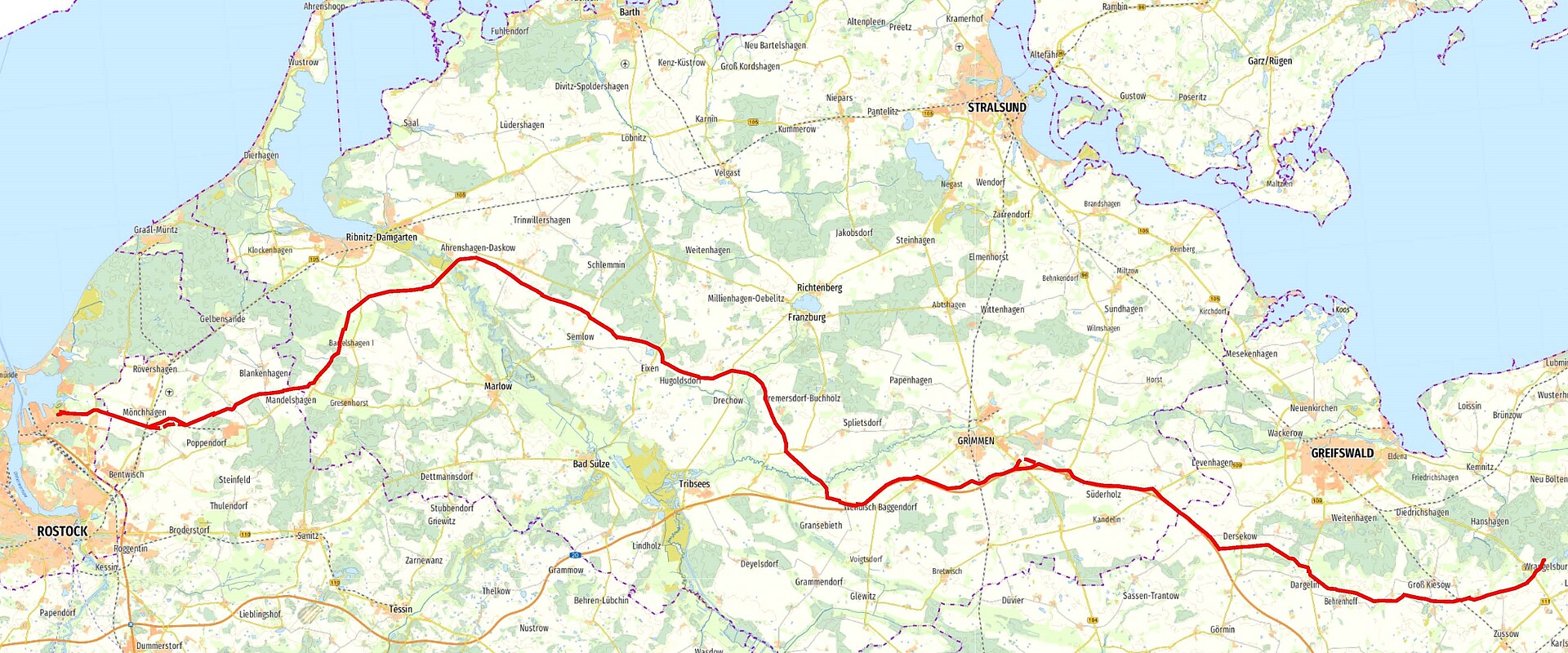
A 115-kilometer pipeline will connect Rostock to the north-south axis of “Flow – making hydrogen happen” near Wrangelsburg. Commissioning is scheduled for late 2028.
Kassel. With the launch of the planning approval process for the HYROW hydrogen pipeline, GASCADE Gastransport GmbH (GASCADE) has reached an important milestone in the development of hydrogen infrastructure in Germany. HYROW is GASCADE’s first new construction project within the German core hydrogen network to move from the planning phase to the approval phase. The project thus complements the pipeline sections of “Flow – making hydrogen happen” that are already in operation and makes a further contribution to the development of a high-capacity hydrogen network in Germany.
The formal approval process for the planned hydrogen pipeline begins with the public disclosure of the application documents for the planning approval procedure on November 17, 2026, by the Stralsund Mining Authority. The application documents will be made publicly available on the Stralsund Mining Authority’s website in accordance with legal requirements. This gives private individuals affected by the project, in particular, as well as other stakeholders, the opportunity to participate in the process.
The HYROW pipeline is scheduled to run approximately 115 kilometers from Rostock to Wrangelsburg. There, the pipeline will connect to the north-south axis of “Flow – making hydrogen happen.” This will create an important link between the Rostock region and the supraregional hydrogen network. At the same time, connection points for hydrogen producers and consumers in Mecklenburg-Western Pomerania will be established along the planned route. This will provide the state with a hydrogen infrastructure at an early stage, contributing to the strengthening of its position as a business hub. HYROW is part of Germany’s core hydrogen network and is scheduled to begin operations at the end of 2028.
Preliminary archaeological surveys are expected to begin in 2026
In parallel with the permitting process, preliminary archaeological surveys are expected to begin at around 50 sites along the planned route in late 2026. The work will continue through 2027. The goal is to identify potential cultural and historical finds early on so they can be taken into account in the further planning and subsequent construction of the line.